


SI Bone Fusion
SI Joint Fusion
The SI joint can be a significant cause of lower back pain.Clinical publications have identified the SI joint as a pain generator in15-30% of chronic lower back pain patients.1-4 In addition, the SIjoint is a pain generator in up to 43% of patients with continued or new onsetlower back pain after a lumbar fusion.5

Making a Diagnosis
A variety of tests performed during physical examination may help reveal the SI joint as the cause of your symptoms. Sometimes, X-rays, CT-scan or MRI may be helpful in the diagnosis of SI joint-related problems because they can rule out other common sources of pain—such as your lumbar spine or hip joints. It is also important to remember that other conditions (like a disc problem) can co-exist with SI joint disorders.
The most relied upon method to accurately determine whether the SI joint is the cause of your lower back pain symptoms is to inject the SI joint with a local anesthetic. This diagnostic injection will be performed under either X-ray or CT guidance to verify accurate placement of the needle in the SI joint. If your symptoms decrease by at least 75%, it can be concluded that the SI joint is either the source of or a major contributor to your lower back, hip, or pelvic pain. If the level of pain does not change after SI joint injection, it is less likely that the SI joint is the cause of your pain.
Treatment Options
Once the SI joint is confirmed as the cause of your symptoms, treatment can begin. Some patients respond well to physical therapy,use of oral medications, or injection therapy. These treatments are often performed repetitively, and frequently symptom improvement using these therapies is temporary. If non-surgical treatment options have been tried and do not provide long-term relief, your surgeon may consider other options,including the minimally invasive iFuse procedure.
iFuse TORQ® is designed to stabilize and fuse the SI joint.The iFuse procedure involves inserting typically three threaded titanium implants across the SI joint to maximize stability, reduce pain, and improve function. The procedure is done through a small one-inch incision and takes about an hour. The 3D-printed iFuse TORQ implant was designed for osseointegration, which is the structural and functional connection between implant and bone. This allows your painful joint to be stabilized through binding of bone all along the implant.6
iFuse Technology®
iFuse TORQ® Implant System is one of the latest innovative solutions from SI-BONE, the creator of the minimally-invasive SI joint fusion device—the triangular titanium iFuse Implant. More than 100, peer-reviewed publications demonstrate the safety, durable effectiveness, and biomechanical and economic benefits of the iFuse implant (www.si-bone.com/results). The iFuse implant is the only SI joint fusion device with multiple prospective clinical studies, including two randomized controlled trials7,8, demonstrating that treatment improved pain, patient function, and quality of life.7-12 As with any minimally invasive surgical procedures, there are potential risks associated with the iFuse Implant System. It may not be appropriate for all patients and all patients may not benefit. For information about the risks, visit www.si-bone.com/risks.
References
1. Bernard TN, et al. Recognizing specific characteristics of nonspecific low back pain. Clin Orthop Relat Res. 1987;217:266–80.
2. Schwarzer AC, et al. The Sacroiliac Joint in Chronic Low Back Pain. Spine. 1995;20:31–7.
3. Maigne JY, et al. Results of Sacroiliac Joint Double Block and Value of Sacroiliac Pain Provocation Tests in 54 Patients with Low Back Pain. Spine. 1996;21:1889–92.
4. Sembrano JN, et al. How Often is Low Back Pain Not Coming From The Back? Spine. 2009;34:E27–32.
5. DePalma MJ, et al. Etiology of Chronic Low Back Pain Patients Having Undergone Lumbar Fusion. Pain Med. 2011;12:732-9.
6. SI-BONE 300857-R.
7. Polly DW, et al., and the INSITE Study Group. Two-Year Outcomes from a Randomized Controlled Trial of Minimally Invasive Sacroiliac Joint Fusion vs. Non-Surgical Management for Sacroiliac Joint Dysfunction. Int J Spine Surg. 2016;10:Article 28. DOI: 10.14444/3028
8. Dengler J, et al. Randomized Trial of Sacroiliac Joint Fusion vs. Conservative Management for Chronic Low Back Pain Attributed to the Sacroiliac Joint. J Bone Joint Surg Am. 2019;101(5):400-11. DOI: 10.2106/JBJS.18.00022.
9. Duhon B, Bitan F, Lockstadt H, Kovalsky D, Cher D, Hillen T, on behalf of the SIFI Study Group. Triangular Titanium Implants for Minimally Invasive Sacroiliac Joint Fusion: 2-Year Follow-Up from a Prospective Multicenter Trial. Int J Spine Surg. 2016;10:Article 13. DOI: 10.14444/3013
10. Dengler J, et al. on behalf of the INSITE, iMIA and SIFI study groups. Predictors of Outcome in Conservative and Minimally Invasive Surgical Management of Pain Originating from the Sacroiliac Joint – a Pooled Analysis. Spine. 2017;42(21):1664-73. [Epub 2017 Mar 27]. DOI: 10.1097/BRS.0000000000002169
11. Whang PG, et al. Long-Term Prospective Clinical and Radiographic Outcomes After Minimally Invasive Lateral Transiliac Sacroiliac Joint Fusion Using Triangular Titanium Implants. Med Devices (Auckl). 2019;12:411-422. DOI: 10.2147/MDER.S219862
12. Patel V, et al. Prospective Trial of Sacroiliac Joint Fusion Using 3D-Printed Triangular Titanium Implants: 24-Month Follow-Up. Med Devices (Auckl). 2021;14:211-216. DOI: 10.2147/MDER.S314828
Why Choose Vascular & Interventional Partners?
SI joint injury and/or degeneration can interfere with living your best life. The skilled professionals at Vascular & Interventional Partners have treated countless patients suffering from chronic lower back, hip, or pelvic pain and are committed to achieving the best possible outcome for each individual.
With the leading interventional radiologists in Arizona, our doctors are experts in using innovative technologies for pain relief. We are committed to a patient-first approach that prioritizes your comfort and well-being throughout every step of the treatment process.
Trust us to provide the relief you deserve. To learn more about this procedure and find out if it is right for you, email referrals@VIPinterventional.com or call us today at (480) 674-0202.

Frequently Asked Questions
Is your “low back pain” truly coming from your lower back?
Low back pain is a common issue that affects many people during their lifetime. There are many structures in the lower back and pelvic area that can cause pain. Most commonly, people with low back pain believe that the lumbar spine is the cause of their pain. Occasionally, hip problems can cause pain that is sometimes confused with low back conditions. Another common cause of low back pain symptoms can be the sacroiliac joint. SI joint dysfunction can be a significant contributor to pain in the lower back, pelvic region, buttocks, or legs.
Where is the sacroiliac (SI) joint?
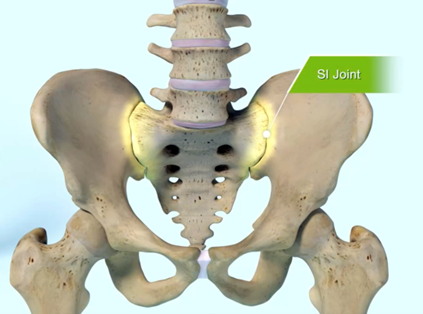
The SI joint is located in the posterior pelvis, linking the iliac bones (pelvis) to the sacrum (lowest part of the spine above the tailbone).
What is the function of the sacroiliac joint?
The function of the SI joint is to transfer weight and forces due to movement from your legs, through the pelvis to your upper body and vice versa—acting as an anatomical shock absorber to protect the spine during activity. The primary role of the SI joint is to provide stability for the pelvis and to bear the load of the upper body.
What causes SI joint pain?
Trauma and degeneration are two leading causes of SI joint dysfunction. Sacroiliac joint trauma can occur during motor vehicle accidents, falls on the buttocks, lifting and/or twisting, pregnancy and childbirth. Sacroiliac joint degeneration can occur as a result of previous lumbar spine surgery, stresses to the SI Joint due to leg length differences, osteoarthritis, and prior infection of the SI joint.
How is SI joint dysfunction diagnosed?
A sacroiliac joint exam includes:
- Consideration of a patient’s health history and symptoms
- Asking the patient to point to where it hurts (Fortin Finger Test)6
- Physical examination, including provocative tests (stressing the joint in an attempt to recreate the pain)
- Diagnostic injections (injecting anesthetic into the joint to see if the pain goes away)
What are some of the most common symptoms of SI joint dysfunction?
Common symptoms include:
- Lower back pain (below L5)
- Sensation in lower extremity; pain, numbness, tingling, weakness
- Pelvis/buttock pain
- Hip/groin pain
- Feeling of leg instability (buckling, giving way)
- Disturbed sleep patterns due to pain
- Disturbed sitting patterns (unable to sit for long periods, sitting on one side)
- Pain when going from sitting to standing
How is the iFuse TORQ Implant System® used to treat SI joint dysfunction?
Typically, the physician places three small 3D-printed titanium TORQ implants across the joint using the lateral transiliac approach. The iFuse TORQ implants are designed with cutting-edge features intended for fixation and fusion of the SI joint. The 3D printed surface is similar to cancellous bone and has the same iFuse Technology used in SI-BONE’s triangular titanium implants.
How can you learn more about SI joint dysfunction,
symptoms, treatment, and the iFuse Implant Systems?
Prospective patients should speak to their doctor and can learn more about sacroiliac joint dysfunction, treatment options, and the iFuse Implant Systems via SI-BONE’s website, www.si-bone.com. For indications, risks, and safety information about the iFuse Implant System, visit www.si-bone.com/risks.
1 Bernard TN Jr, Kirkaldy-Willis WH. Recognizing Specific Characteristics of Nonspecific Low Back Pain. Clin Orthop Relat Res. 1987 Apr;(217):266-80.
2 Schwarzer AC. The Sacroiliac Joint in Chronic Low Back Pain. Spine. 1995:20(1):31-7.
3 Maigne JY, et al. Results of sacroiliac joint double block and value of sacroiliac pain provocation tests in 54 patients with low back pain. Spine. 1996;21:1889–92
4 Irwin RW, et al. Age, body mass index, and gender differences in sacroiliac joint pathology. Am J Phys Med Rehabil. 2007;86(1):37-44.
5 Sembrano JN, Polly DW Jr. How Often is Low Back Pain Not Coming From the Back? Spine. 2009 Jan;34(1):E27-32
6 Fortin JD, Falco FJ. The Fortin finger test: an indicator of sacroiliac pain. Am J Orthop (Belle Mead NJ). 1997 Jul;26(7):477-80.